Training guides
How to Train Strongman at a Regular Gym
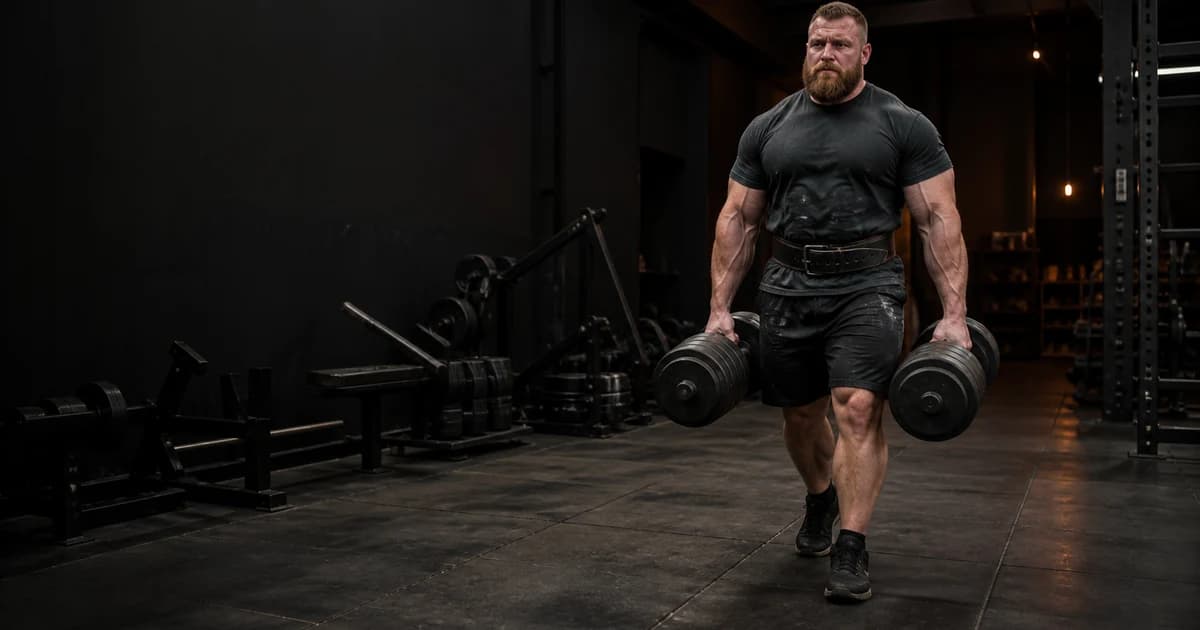
You can train most strongman qualities in a regular gym by matching movement patterns rather than copying competition implements. Use trap-bar or dumbbell carries for farmer’s walks, landmine presses for awkward overhead strength, front squats for loading positions, and cable or sled work for pulls.
Direct answer
You can train most strongman qualities in a regular gym by matching movement patterns rather than copying competition implements. Use trap-bar or dumbbell carries for farmer’s walks, landmine presses for awkward overhead strength, front squats for loading positions, and cable or sled work for pulls.
You can build useful repetitions outside a coached session when you choose movements that do not require a resisting partner, heavy spotting, or uncontrolled contact.
What you can and cannot train alone
bracing, heavy carries, floor-to-shoulder patterns with appropriate equipment, overhead strength, grip, and work capacity. Do not use solo practice to teach yourself live throws, submissions, sparring, maximal lifts, or any movement you cannot stop safely. A qualified coach should supervise those jobs.
Avoid: dropping weights where it is prohibited, blocking walkways, improvised unstable loads, maximal yoke simulations, and any event the gym cannot support safely. This boundary keeps the skill repeatable and reviewable. It stops you from copying the riskiest part of the sport without the conditions that make it coachable.
Useful equipment: trap bar or heavy dumbbells, landmine, barbell, cable stack, sled if allowed, and an open lane. Use only equipment that the venue permits and that you checked before the session.
Set up the session
Clear the floor, check every anchor and implement, choose a camera angle before you start, and stop the set when your position changes. Quality matters more than squeezing in extra repetitions.
Use this order:
- Two to five minutes of easy movement and joint preparation.
- One slow rehearsal of every drill.
- The main block below at a pace you can stop.
- One recorded set after you already understand the movement.
- A short note with the one checkpoint you will repeat next time.
The core practice block
| Step | Practice |
|---|---|
| 1 | Farmer carry substitute: heavy dumbbells or trap handles for 15 to 30 metres |
| 2 | Landmine press: staggered stance and controlled lockout |
| 3 | Front squat: build the upright receiving position |
| 4 | Cable row or rope pull: brace before each pull |
| 5 | Sandbag substitute: bear-hug a stable soft training bag only if the gym provides one |
Train one carry, one press, one squat or hinge, and one pull each week. Keep event-style work submaximal until you can repeat the same route, pick, and finish position without obstructing other members.
Do not add speed and resistance at the same time. Change one variable, then keep the camera angle, range, and rest period consistent enough to judge the result.
A repeatable weekly plan
Use two or three short technical sessions around your normal coached or strength work. Keep one goal for the whole week so you can compare attempts instead of changing the test every day.
A useful week has one baseline day, one practice day, and one review day. Record a normal attempt on the baseline day. Practise the selected cue without the camera on the second day. Repeat the original setup on the review day and decide whether the cue produced a visible difference.
Use these related guides when you need a narrower explanation: app comparison, video analysis guide, technique guide. Each page solves a separate job, so this plan stays focused on the question above.
Use video as a decision tool
Record one baseline set from an angle that shows the joints and contact points that matter. Review one visible checkpoint, save one cue, then record a second comparable set. Video cannot replace coaching, but it can make your next coaching question more precise.
Common mistakes
- choosing novelty instead of a measurable pattern
- turning a busy aisle into a carry lane
- using an unstable homemade implement
Another common error is changing the drill, angle, load, and cue together. That creates activity but leaves no clean comparison. Keep the test simple enough to learn from it.
Questions people ask
Can a beginner use this plan?
Yes, if you keep the drills controlled, use conservative resistance, and ask a qualified coach to check any skill that involves contact, impact, falling, or heavy loading.
How long should a session last?
Twenty to forty focused minutes is enough for most technical sessions. End earlier when speed, balance, or joint position changes.
How do I know whether I improved?
Compare the same drill under the same conditions. Look for a cleaner position, steadier tempo, or fewer compensations. Do not treat one flattering camera angle as proof.
Sources and scope
This guide separates controlled practice from skills that need qualified supervision. The linked governing-body material defines the sport context; the product link documents the app workflow.